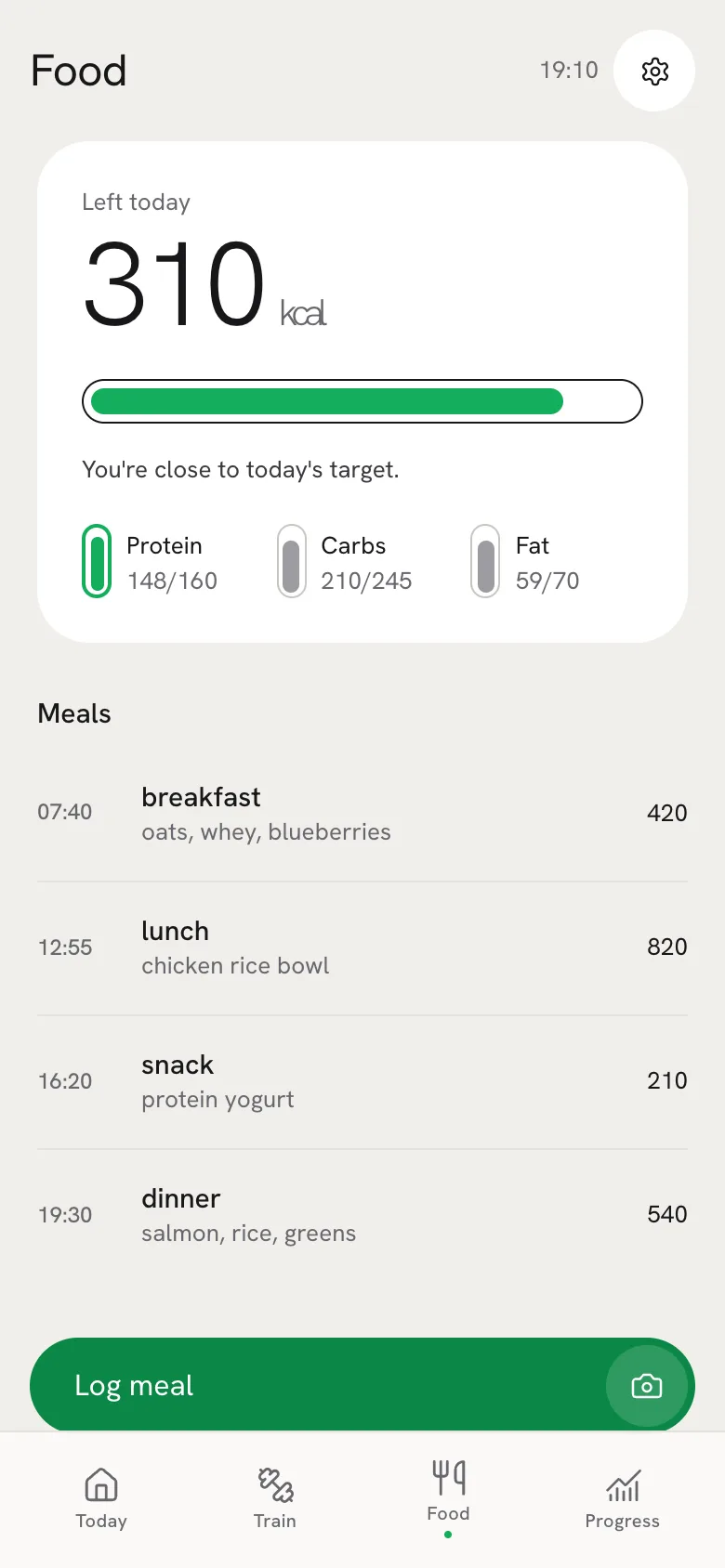
A training and food log you’ll actually keep
Build a practical logging routine for workouts and meals, review gaps honestly, and avoid treating food estimates as explanations of every session.
Pick a routine you can repeat
Log working sets during the session, and meals while you still remember what was in them. Keep both on the right day. Start with the fields you can fill in every time. Don’t try to rebuild a whole week from memory.
When you review the week, first ask whether each record is complete enough for the question you’re asking. An unlogged dinner is unknown. It isn’t zero.
Reviewing a day without making up a cause
Picture Tuesday: a complete workout log, breakfast and lunch logged, no dinner. Your reps were down on the previous session. You can note both, but the food log is too patchy to explain the workout.
Add the dinner if you actually remember it. If not, leave the gap. For photo entries, check the suggested items and portions before saving, and treat any portion you’re unsure of as an estimate.
What your logs can and can’t tell you
Laroa’s Train, Food and Progress views put the records together. Compare several days and similar sessions, and note changes to your schedule or equipment when you know them.
Logs help you ask better questions. They can’t show that one meal caused one workout result. This routine doesn’t set calorie or nutrient targets, and any proposed plan change is still yours to accept.
| Day | kcal | Session | kg |
|---|---|---|---|
| Mon | 2,240 | Lower A | 81.9 |
| Tue | 2,180 | Rest | 82.1 |
| Wed | 2,310 | Upper A | 81.6 |
| Thu | Not logged | Lower B | 81.8 |
| Fri | 2,150 | Rest | 81.5 |